
Tunbridge Wells garden waste collections would rise from £70 to £80 a year from April 2027. The council says its new waste contract has nearly doubled in cost.
A garden waste subscription in Tunbridge Wells would go up from £70 to £80 a year from April 2027. That is a rise of 14.29%, proposed by the borough council in its prices for next year.
The council says the cost of collecting each garden waste bin will rise by 200% under its new waste contract. The proposal is in the fees and charges report for 2027/28, which goes to Cabinet on 3 December.
Overview
- Garden waste: £80 a year from April 2027, up from £70, if Cabinet agrees on 3 December.
- Bulky waste: £72 a slot for up to four items, up from £70. It stays £10 for people on Band 1 of the Council Tax Reduction Scheme.
- Parking charges: no change proposed. They last went up on 1 October 2025.
- Why: the waste and street sweeping contract ends on 31 March 2027, and the new one costs nearly twice as much.
- Council tax: the council’s plans assume a 3% rise each year. Full Council decides the actual figure in February 2027.
Why garden waste is going up
The council has 22,515 garden waste bins on its books. The report says it is reviewing them so that every bin is “either paid for or collected”, so that nobody gets the service without paying.
The report says the cost of collecting each bin rises by 200% in 2027/28 under the new contract, “so the Council must raise the prices to help cover this cost”. It adds that when prices have gone up before, the number of subscribers has not fallen.
More people now renew by Direct Debit. The council has 9,147 Direct Debit customers for garden waste, up from 8,214 in 2025/26. That is 44.36% of all subscribers.
The new waste contract
The current waste and street sweeping contract expires on 31 March 2027. The draft budget report says the cost of the new one “has nearly doubled”.
The report calls it the largest service contract the council has ever awarded. It is the main reason the 2027/28 budget does not balance.
The draft budget for 2027/28 has a gap of £259,000. If nothing is done, that gap grows to £1.8 million in 2028/29, the report says. Contracts account for an extra £3.714 million of spending compared with this year.
Other prices in the report
The fees and charges report also proposes:
- parking bay suspensions up from £100 to £110, plus £12 per 6 metre bay per day instead of £10
- cremation prices left mostly the same or cut slightly, to compete with the crematoria in Maidstone and Horam
- burials up by around 4%
- parks facility hire up by between 2% and 5%
The council expects its income from these fees and charges to reach £7,508,320 in 2027/28. That is £320,810 more than this year, a rise of 4.17%.
Reserves and council tax
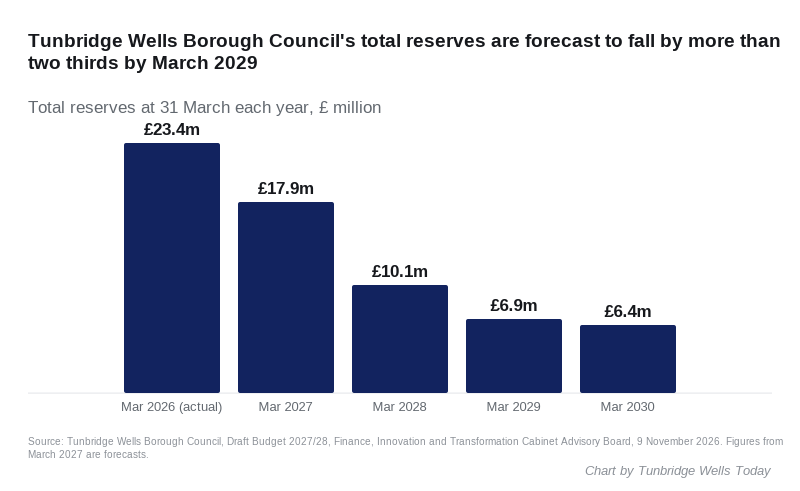
The draft budget forecasts the council’s total reserves falling from £23.4 million in March 2026 to £6.9 million by March 2029. Earmarked reserves, the money set aside for particular projects, fall from £14.6 million to £1.7 million over the same period.
The report says the council has no external debt. With its reserves “largely allocated”, it says the council will need to start borrowing to pay for any additional building and repair schemes.
The plans assume council tax goes up by 3% a year. The report says the Government will confirm the limit on rises in December, and that the Government already assumes the council will raise council tax by the maximum allowed. The council’s share of council tax is budgeted to bring in £11.21 million in 2027/28, up from £10.78 million.
The council has historically kept its council tax very low. Its strategy now is to raise it up to the limit that would trigger a referendum. The report says the £5 a year rise allowed to low-charging councils has been frozen since 2016, so it is now below the 3% cap for every council in Kent. Your council tax band decides what you pay.
The council’s Finance, Innovation and Transformation Cabinet Advisory Board backed both reports on 9 November, its minutes record. Officers told the meeting that the Government gave the council no extra money for higher National Insurance or the rise in the living wage, so those costs fell on council tax payers.
New repair schemes
The draft budget lists seven new schemes for 2027/28, costing £255,440 in total. They include:
- £55,000 to repair the footpath in Grosvenor Park
- £50,000 to replace the Grosvenor and Hilbert bridge, half of it from a Kent County Council grant
- £37,440 for footpath surfacing at Bayham, paid for by developer contributions
- £30,000 for new fire alarm panels at the Assembly Hall
- £65,000 for a new catafalque lift and emergency lighting at the crematorium
What it means for you
- If you pay for garden waste, expect your next renewal from April 2027 to cost £80 rather than £70, if Cabinet agrees on 3 December.
- If you book a bulky collection, it will cost £72 rather than £70 from April 2027. The £10 rate for Band 1 Council Tax Reduction Scheme recipients stays, for up to four slots a year.
- If you park in town, no change to parking charges is proposed for next year.
- You can have your say on the budget. If Cabinet agrees the draft budget on 3 December, the council will publish it on its website with a consultation survey. The report says residents will be asked how they would share out the money between services.
- Council tax for 2027/28 is set by Full Council in February 2027.
Have your say